Hellenika — Ancient Greek figures in mosaic timeline cards

The ancient Greeks, card by card, through time →

Site by Dan Vineyard — images and site © 2026 · 200 Aesop's Fables

Mosaic of Deucalion & PyrrhaAge of Myth · The Flood

Deucalion & Pyrrha

Δευκαλίων καὶ Πύρρα

dyoo-KAH-lee-on & PUR-uh (Classical Greek: deu-KAH-lee-ohn kai PEWR-rha)

What to know

The proto-parents of every Greek. Warned by his father Prometheus that Zeus would drown a wicked age, Deucalion built a chest of timber and floated through nine days of rain with his wife Pyrrha, daughter of Epimetheus and Pandora — the first woman's line. They came to rest on Mount Parnassus, where an oracle told them to 'throw the bones of your mother behind you': the bones of Mother Earth are stones. The stones he threw became men, hers became women. Their son Hellen gave the whole Greek world its name.

Born
Not dated · myth
Son of Prometheus · Daughter of Epimetheus & Pandora
Died
Not dated · myth
His tomb shown at Athens · no grave counted for her
Age
—

Where their story is told

Where they lived · Mount Parnassus, Phocis

01
Mosaic of DeucalionAge of Myth · The Flood

Deucalion

Δευκαλίων

dyoo-KAH-lee-on (Classical Greek: deu-KAH-lee-ohn)

What to know

The builder of the chest. His father Prometheus — the titan who gave fire to mortals — warned him that Zeus would drown a wicked age, so Deucalion cut timber and built a chest, caulked it and floated it with his wife through nine days of rain while every other man was drowned. When the water drew off and the chest grounded on Mount Parnassus, he burnt an offering to the gods of the land and asked the oracle how mankind might be renewed. The answer came: 'Go veiled, and throw the bones of your mother behind you.' Knowing Mother Earth is the earth and her bones are stones, he threw them over his shoulder, and where they fell men stood up.

Born
Not dated · myth
Son of Prometheus and Climene
Died
Not dated · myth
His tomb shown at Athens
Age
—

Where his story is told

Where he lived · Mount Parnassus, Phocis

02
Mosaic of PyrrhaAge of Myth · The Flood

Pyrrha

Πύρρα

PUR-uh (Classical Greek: PEWR-rha)

What to know

The woman who remade the female half of mankind. Her name is the colour of fire — pyr, flame — and she carries the most dangerous inheritance in Greek myth: she is the daughter of Pandora, the first woman, whose opening of the jar let every trouble into the world. In the chest she rode out the nine days of rain beside her husband; on Parnassus she heard the same command to throw the bones of Mother Earth behind her, and her stones became women. With Deucalion she repeopled a drowned world, and their son Hellen gave the Greeks their name. No grave of hers was counted anywhere in Greece — but at Delphi, beside the gold of Croesus, Pausanias saw an offering still shown as hers.

Born
Not dated · myth
Daughter of Epimetheus and Pandora
Died
Not dated · myth
No grave was counted for her
Age
—

Where her story is told

Where she lived · Mount Parnassus, Phocis

03
Mosaic of HellenAge of Myth · The Hellenes

Hellen

Ἕλλην

HEL-en (Classical Greek: HEL-lehn)

What to know

The name-sake. Son of Deucalion and Pyrrha, he ruled in Phthiotis in Thessaly, and from him all the Greeks took their name — Hellenes, and the land Hellas. Herodotus and Thucydides both record it. By the nymph Orseis he fathered Dorus, Xuthus and Aeolus. The four Greek peoples do not all come from his generation: Dorians and Aeolians come straight from Dorus and Aeolus, while Ionians and Achaeans come from his grandsons Ion and Achaeus, the sons of Xuthus. He is the hinge that turns two flood survivors into peoples.

Born
Not dated · myth
Of Deucalion and Pyrrha
Died
Not dated · myth
No grave was counted
Age
—

Where his name is recorded

Where he lived · Phthiotis, Thessaly

04
Mosaic of DorusAge of Myth · Sons of Hellen

Dorus

Δῶρος

DOR-us (Classical Greek: DAW-ros)

The Dorians — named from Dorus

What to know

The first Dorian. Herodotus, tracing the wanderings of the Greek tribes, says that while Deucalion reigned the Hellenes lived in Phthiotis, but 'under Dorus, the son of Hellen' they moved to Histiaeotis, the land at the base of Mounts Ossa and Olympus. Driven on from there, the Dorians later came south into the Peloponnese and gave Sparta its speech and its way of life; Plato's Republic still speaks of 'Doric' tunes.

Born
Not dated · myth
Son of Hellen and Orseis
Died
Not dated · myth
No grave was counted
Age
—

Where his name is recorded

Where he lived · Histiaeotis, at the foot of Olympus

05
Mosaic of AeolusAge of Myth · Sons of Hellen

Aeolus

Αἴολος

EE-oh-lus (Classical Greek: AI-o-los)

The Aeolians — named from Aeolus

What to know

Name-father of the Aeolians, the third great division. In Homer, Aeolus son of Hippotas rules a floating island and hands Odysseus the bag of the winds; later writers merged that wind-lord with Hellen's son. His people held Boeotia and Thessaly first, then crossed the sea to Aeolis on the coast of Asia Minor — twelve towns, with Lesbos off their harbour. Sappho and Alcaeus wrote in the Aeolian tongue.

Born
Not dated · myth
Son of Hellen and Orseis
Died
Not dated · myth
No grave was counted
Age
—

Where his name is recorded

Where he lived · Thessaly; Aeolis, Asia Minor

06
Mosaic of XuthusAge of Myth · Sons of Hellen

Xuthus

Ξοῦθος

ZOO-thus (Classical Greek: KSOO-t-hos)

No tribe of his own — father of Ion and Achaeus

What to know

The branch that splits the tree. Euripides makes him an Athenian by adoption: husband of Creusa, daughter of the Athenian king Erechtheus, and childless — until the oracle at Delphi tells him the first boy he meets outside the temple is his own son. That boy is Ion. Xuthus names no people himself, but through him Hellen becomes the grandfather of Ion and Achaeus, and so of the Ionians and the Achaeans.

Born
Not dated · myth
Son of Hellen and Orseis
Died
Not dated · myth
No grave was counted
Age
—

Where his story is told

Where he lived · Athens, by marriage

07
Mosaic of IonAge of Myth · Sons of Xuthus

Ion

Ἴων

EYE-on (Classical Greek: EE-ohn)

The Ionians — named from Ion

What to know

The most famous of the grandsons. In Euripides' play he grows up as a temple servant at Delphi, never knowing that Creusa — the Athenian who left him to die — is his mother, and that Apollo, not Xuthus, is his father. Herodotus records the name plainly: when Ion son of Xuthus became the Athenians' general, they were called Ionians after him. His people colonised the coast of Asia Minor — Miletus, Ephesus — and gave Greek its most musical dialect, the tongue of Homer's epic and of Hippocrates.

Born
Not dated · myth
Son of Xuthus and Creusa
Died
Not dated · myth
No grave was counted
Age
—

Where his name is recorded

Where he lived · Delphi, then Ionia

08
Mosaic of AchaeusAge of Myth · Sons of Xuthus

Achaeus

Ἀχαιός

ah-KEE-us (Classical Greek: a-k-hai-OS)

The Achaeans — named from Achaeus

What to know

The quietest of the four names, and the oldest. Homer never calls the expedition against Troy 'Greeks': he calls it Danaans, Argives and Achaeans — and in the catalogue of ships the men of Phthiotis are 'Myrmidons, Hellenes, and Achaeans.' Later writers made Achaeus a son of Xuthus so the name would fit the family tree. His people held Achaea Phthiotis in the north, were pushed south by the Dorians, and gave their old name to the coast the Romans still called Achaia.

Born
Not dated · myth
Son of Xuthus and Creusa
Died
Not dated · myth
No grave was counted
Age
—

Where his name is recorded

Where he lived · Phthiotis, then Achaia

09
Mosaic of CadmusHeroic Age · City Founders

Cadmus

Κάδμος

KAD-mus (Classical Greek: KAD-mos)

What to know

A Phoenician prince sent to find his sister Europa, carried off by Zeus. The oracle at Delphi told him to stop searching, follow a cow, and found a city where she lay down — that city was Thebes. He killed the dragon guarding a spring and sowed its teeth; armed men sprang up, and the five survivors became the noble families of Thebes. Herodotus credits him with bringing the alphabet to Greece. In old age he and his wife Harmonia were turned into serpents.

Born
Not dated · myth
Tyre, Phoenicia, son of King Agenor
Died
Not dated · myth
Illyria, turned into a serpent
Age
—

Where his story is told

Where he lived · Thebes, Boeotia

10
Mosaic of PerseusHeroic Age · City Founders

Perseus

Περσεύς

PUR-see-us (Classical Greek: per-SEU-s)

What to know

Son of Zeus, who came to his mother Danaë as a shower of gold. Set adrift with her in a chest, he grew up on Seriphos and was sent to fetch the head of Medusa, whose gaze turned men to stone. With Hermes' winged sandals, Hades' cap of invisibility and Athena's polished shield, he beheaded her, then rescued Andromeda from a sea monster. He founded Mycenae, the city of Agamemnon, and was great-grandfather of Heracles.

Born
Not dated · myth
Argos, son of Zeus and Danaë
Died
Not dated · myth
Argolid, placed among the stars
Age
—

Where his story is told

Where he lived · Argos and Mycenae

11
Mosaic of MinosHeroic Age · Crete

Minos

Μίνως

MY-nos (Classical Greek: MEE-nohs)

What to know

King of Knossos and the first ruler, says Thucydides, to build a navy and rule the sea. Son of Zeus and Europa, he received his laws from Zeus himself. When he kept a bull Poseidon sent for sacrifice, his queen Pasiphaë bore the Minotaur, which he hid in Daedalus's Labyrinth and fed with Athenian youths — until Theseus came. After death he became a judge of souls in the underworld. Archaeologists named Bronze Age Crete's 'Minoan' civilization after him.

Born
Not dated · myth
Crete, son of Zeus and Europa
Died
Not dated · myth
Sicily; made a judge of the dead
Age
—

Where his story is told

Where he lived · Knossos, Crete

12
Mosaic of DaedalusHeroic Age · Crete

Daedalus

Δαίδαλος

DED-uh-lus (Classical Greek: DAI-da-los)

What to know

The legendary Athenian craftsman who built the Labyrinth at Knossos for Minos and helped Ariadne guide Theseus out. When Minos confined him, he made feathered wings fastened with wax for himself and his son Icarus. Daedalus escaped, but Icarus flew too close to the sun and fell into the sea. Later stories place the craftsman in Sicily. His inventions express both human ingenuity and its dangers; no secure historical dates or works can be assigned to him.

Born
Not dated · myth
Athens, by tradition
Died
Not dated · myth
Sicily, by tradition
Age
—

Where his story is told

Where he lived · Athens, Knossos and Sicily

13
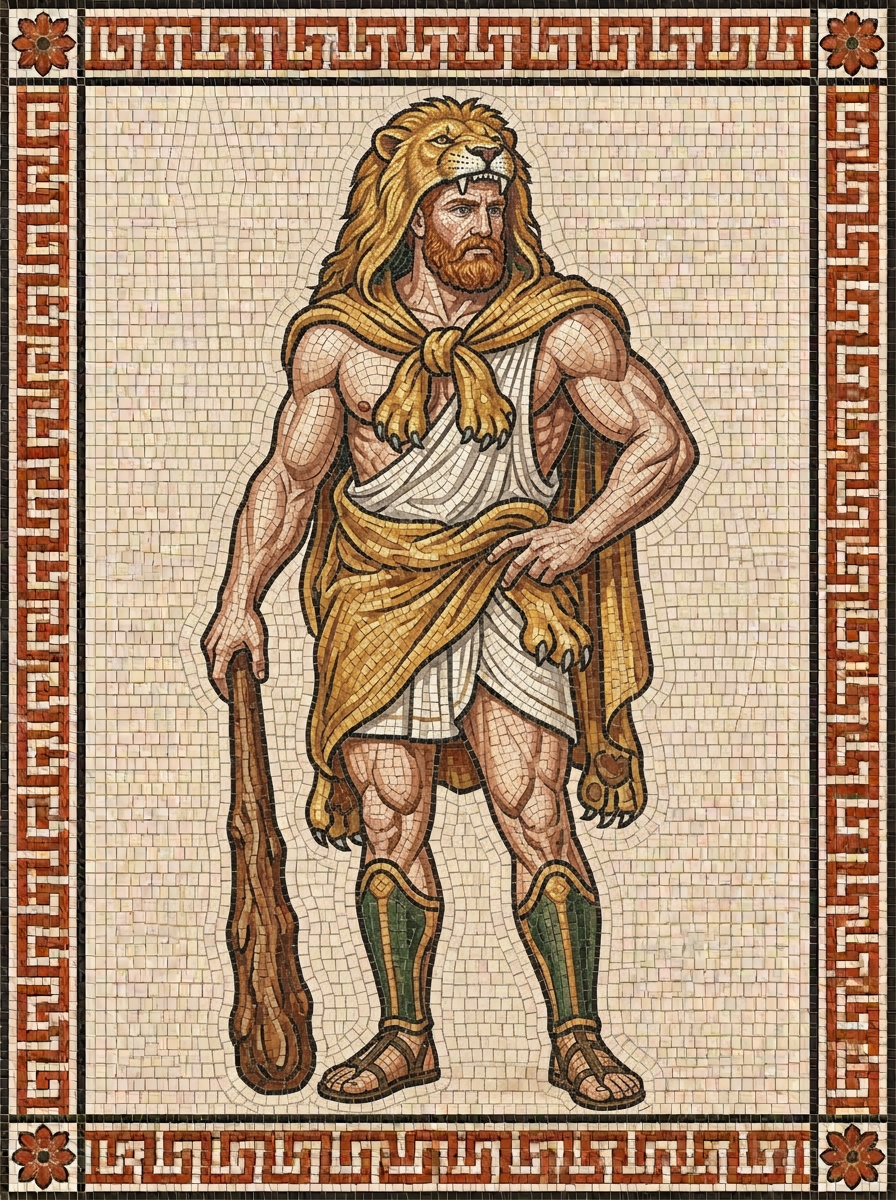
Mosaic of HeraclesHeroic Age · Before Troy

Heracles

Ἡρακλῆς

HAIR-uh-kleez (Classical Greek: hehr-ak-LEHS)

What to know

The greatest Greek hero and the only one made a god. Son of Zeus by a mortal woman, he was hounded all his life by Hera, whose name his own means: 'glory of Hera.' In a fit of madness she sent, he killed his own children, and to atone he served King Eurystheus through twelve labours — the Nemean lion, whose skin he wore, the Hydra, the stables of Augeas, the apples of the Hesperides, Cerberus from the underworld. Dorian kings of Sparta claimed descent from him. Poisoned by a robe dipped in a centaur's blood, he built his own pyre on Mount Oeta and rose to Olympus.

Born
Not dated · myth
Thebes, son of Zeus and Alcmene
Died
Not dated · myth
Pyre on Mount Oeta, raised to Olympus
Age
—

Where his story is told

Where he lived · Thebes, Tiryns and Mount Oeta

14
Mosaic of TheseusHeroic Age · Before Troy

Theseus

Θησεύς

THEE-see-us (Classical Greek: t-heh-SEU-s)

What to know

Athens' own hero, the man the city credited with making it a city. Raised at Troezen, he lifted a rock to find his father's sword and sandals, then walked to Athens clearing the road of bandits. He sailed to Crete among the youths sent as tribute, killed the Minotaur in the Labyrinth and found his way out by Ariadne's thread — but forgot to raise a white sail, and his father Aegeus leapt into the sea that now bears his name. As king he united the villages of Attica into one state, the synoecism Athenians celebrated ever after.

Born
Not dated · myth
Troezen, son of Aegeus (or Poseidon) and Aethra
Died
Not dated · myth
Thrown from a cliff on Skyros
Age
—

Where his story is told

Where he lived · Athens, Attica

15
Mosaic of JasonHeroic Age · The Argonauts

Jason

Ἰάσων

JAY-sun (Classical Greek: ee-AH-sohn)

What to know

Great-grandson of Aeolus and captain of the first great voyage. His uncle Pelias, warned to beware a man with one sandal, saw Jason arrive having lost a shoe in a river — and sent him to fetch the Golden Fleece from Colchis at the far end of the Black Sea. With the Argonauts, a crew of heroes including Heracles, he sailed the Argo through the clashing rocks. The sorceress Medea, daughter of the king, helped him yoke fire-breathing bulls and won him the fleece. Later he abandoned her in Corinth, and she took a terrible revenge.

Born
Not dated · myth
Iolcus, son of Aeson — of Aeolus's line
Died
Not dated · myth
Corinth, struck by the rotting prow of the Argo
Age
—

Where his story is told

Where he lived · Iolcus, Thessaly

16
Mosaic of AgamemnonHeroic Age · Trojan War

Agamemnon

Ἀγαμέμνων

ag-uh-MEM-non (Classical Greek: a-ga-MEM-nohn)

What to know

King of Mycenae and commander of the Greek expedition against Troy. His quarrel with Achilles over the captive Briseis sets the Iliad in motion. In tragedy he sacrifices his daughter Iphigenia to obtain winds for the fleet, though versions differ. Returning from Troy with Cassandra, he is murdered by his wife Clytemnestra and her lover Aegisthus; Orestes later avenges him. The gold mask once called his is centuries earlier than the conventional Trojan War setting and cannot identify him.

Born
Not dated · myth
Son of Atreus and Aerope
Died
Not dated · myth
Mycenae, murdered on his return
Age
—

Where his story is told

Where he lived · Mycenae and Troy

17
Mosaic of AchillesHeroic Age · Trojan War

Achilles

Ἀχιλλεύς

uh-KIL-eez (Classical Greek: a-k-hil-LEU-s)

What to know

The best of the Achaeans and the hero of the Iliad, whose first word is his 'wrath.' Homer calls his hair xanthos — golden. His mother Thetis offered him a choice: a long, quiet life, or a short one with glory that never dies. He chose glory. At Troy he quarrelled with Agamemnon and withdrew; when Hector killed his friend Patroclus he returned, killed Hector and dragged his body — then gave it back to the old king Priam in the poem's great scene of mercy. He fell to an arrow from Paris, guided by Apollo.

Born
Not dated · myth
Phthia, son of Peleus and the sea-goddess Thetis
Died
Not dated · myth
Troy, by Paris's arrow
Age
Young — he chose a short, glorious life

Where his story is told

Where he lived · Phthia, Thessaly, then Troy

18
Mosaic of OdysseusHeroic Age · Trojan War

Odysseus

Ὀδυσσεύς

oh-DISS-ee-us (Classical Greek: o-dews-SEU-s)

What to know

The man of many turns — polytropos — king of rocky Ithaca and the cleverest of the Greeks. It was his idea to build the Wooden Horse that finally took Troy. His journey home took ten more years: the Cyclops, the witch Circe, the Sirens, a visit to the dead, seven years held by the nymph Calypso. He came home alone, disguised as a beggar, strung the great bow no suitor could bend, and reclaimed his house and his faithful wife Penelope. Where Achilles stands for glory, Odysseus stands for cunning and endurance.

Born
Not dated · myth
Ithaca, son of Laertes and Anticleia
Died
Not dated · myth
Ithaca, in old age 'from the sea,' as foretold
Age
Old age

Where his story is told

Where he lived · Ithaca, Ionian Sea

19
Mosaic of HomerArchaic Age · Epic Poetry

Homer

Ὅμηρος

HOH-mer (Classical Greek: HOH-meh-ros)

What to know

The blind bard at the start of Greek literature. Whether one man or a tradition, the Iliad and Odyssey became the Greeks' shared scripture: every schoolboy memorised them, and they fixed the gods, heroes and values of honour, hospitality and cunning for a thousand years. They are also our oldest witness to the Achaeans and Danaans of the family tree.

Born
c. 8th century BC
Ionia (Smyrna or Chios)
Died
Unknown
Ios, by tradition
Age
Unknown

Complete known works

Where he lived · Chios, Ionia

20
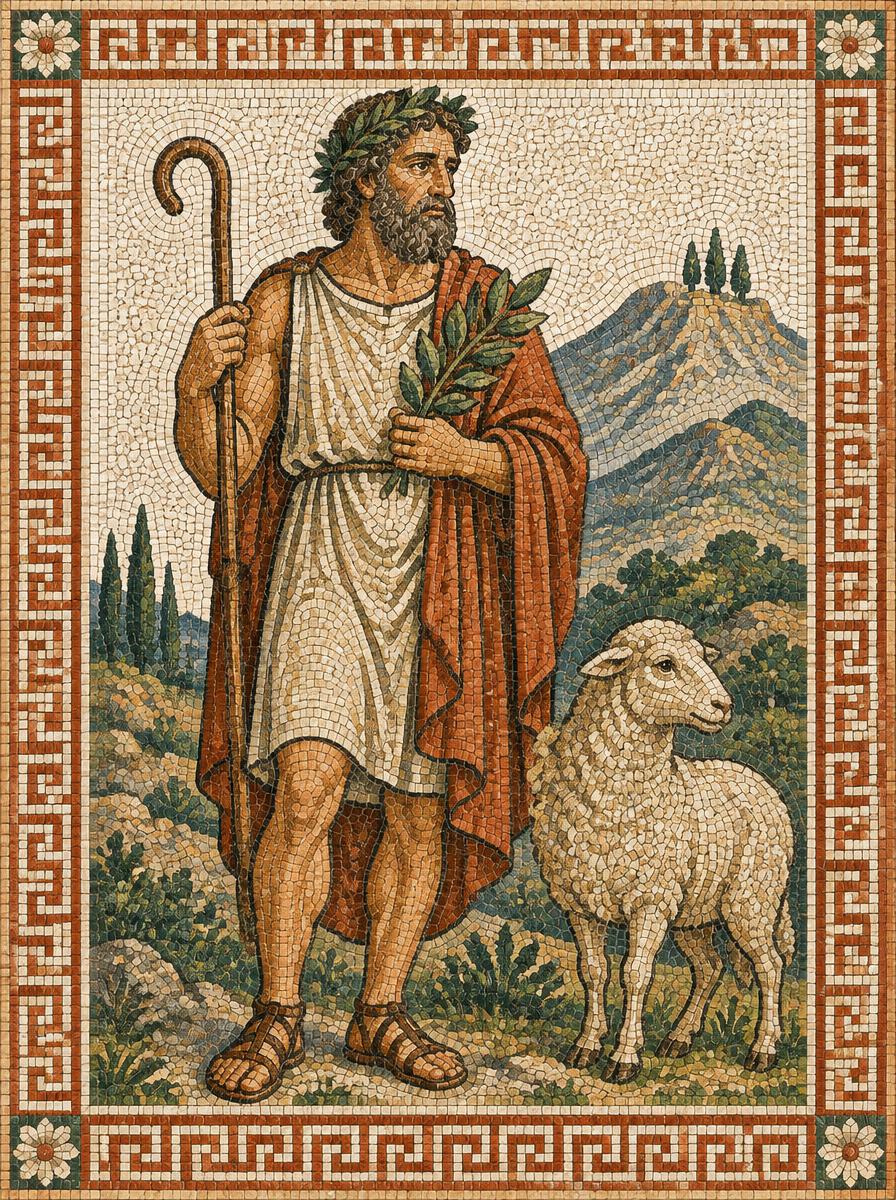
Mosaic of HesiodArchaic Age · Didactic Poetry

Hesiod

Ἡσίοδος

HEE-see-od (Classical Greek: heh-SEE-o-dos)

What to know

A shepherd who said the Muses met him on Mount Helicon and made him a poet. The Theogony orders the gods from Chaos to Zeus; Works and Days is advice to his lazy brother on farming, justice and hard work. He is the first Greek poet to speak as himself, and his Catalogue of Women preserved the line of Deucalion, Hellen and his sons.

Born
c. 750 BC
Ascra, Boeotia
Died
c. 650 BC
Oenoe, Locris (tradition)
Age
Unknown

Complete known works

Where he lived · Ascra, below Mount Helicon

21
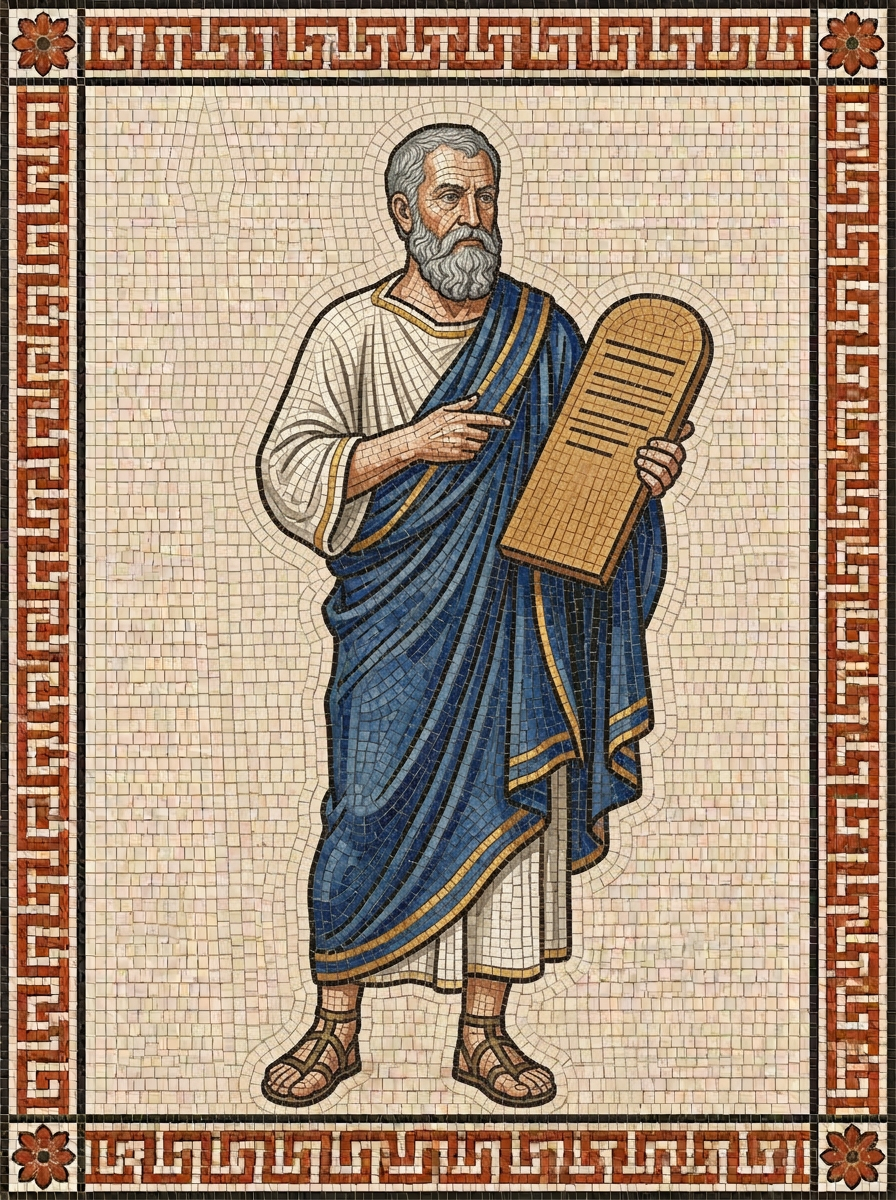
Mosaic of SolonArchaic Age · Athenian Law

Solon

Σόλων

SOH-lon (Classical Greek: SO-lohn)

What to know

Athenian lawgiver, poet and one of the Seven Sages. As archon in 594/593 BC he cancelled debt obligations secured on the person, freed Athenians enslaved for debt, and prohibited future debt bondage. His property-based political arrangements broadened participation without creating the later full democracy. His surviving poems defend moderation and justice. The famous meeting with Croesus is a moral tale whose chronology is problematic, not a secure episode in his life.

Born
c. 638 BC
Athens
Died
c. 558 BC
Uncertain; Cyprus in one tradition
Age
c. 80

Surviving poetry & ancient accounts

Where he lived · Athens, Attica

22
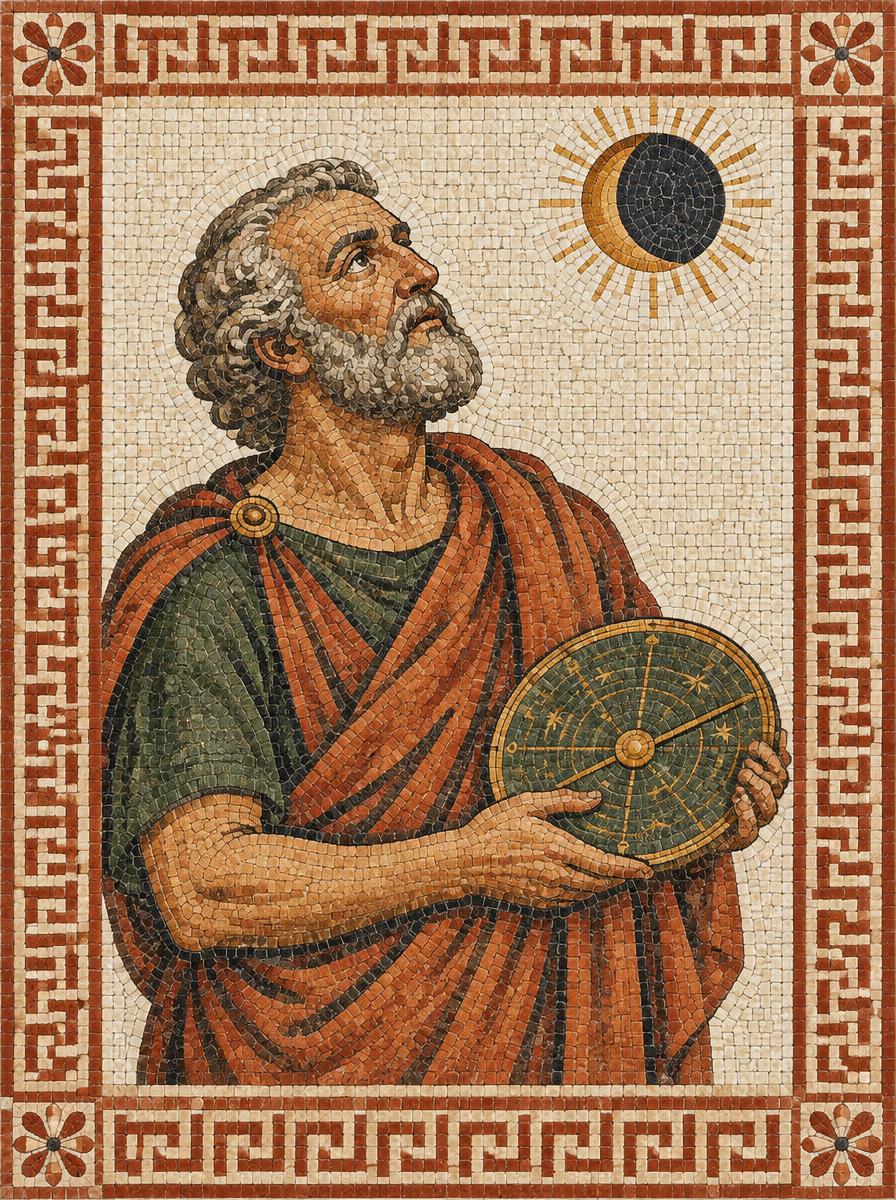
Mosaic of Thales of MiletusArchaic Age · First Philosopher

Thales of Miletus

Θαλῆς ὁ Μιλήσιος

THAY-leez (Classical Greek: t-ha-LEHS)

What to know

Counted first of the Seven Sages and the first Greek philosopher. He wrote nothing that survives, but he asked what the world is made of and answered with nature, not myth: water. He is said to have predicted the solar eclipse of 585 BC, measured the pyramids by their shadows, and proved early theorems of geometry.

Born
c. 624 BC
Miletus, Ionia
Died
c. 548 BC
Miletus, Ionia
Age
c. 76

Where his ideas are recorded

Where he lived · Miletus, Ionia

23
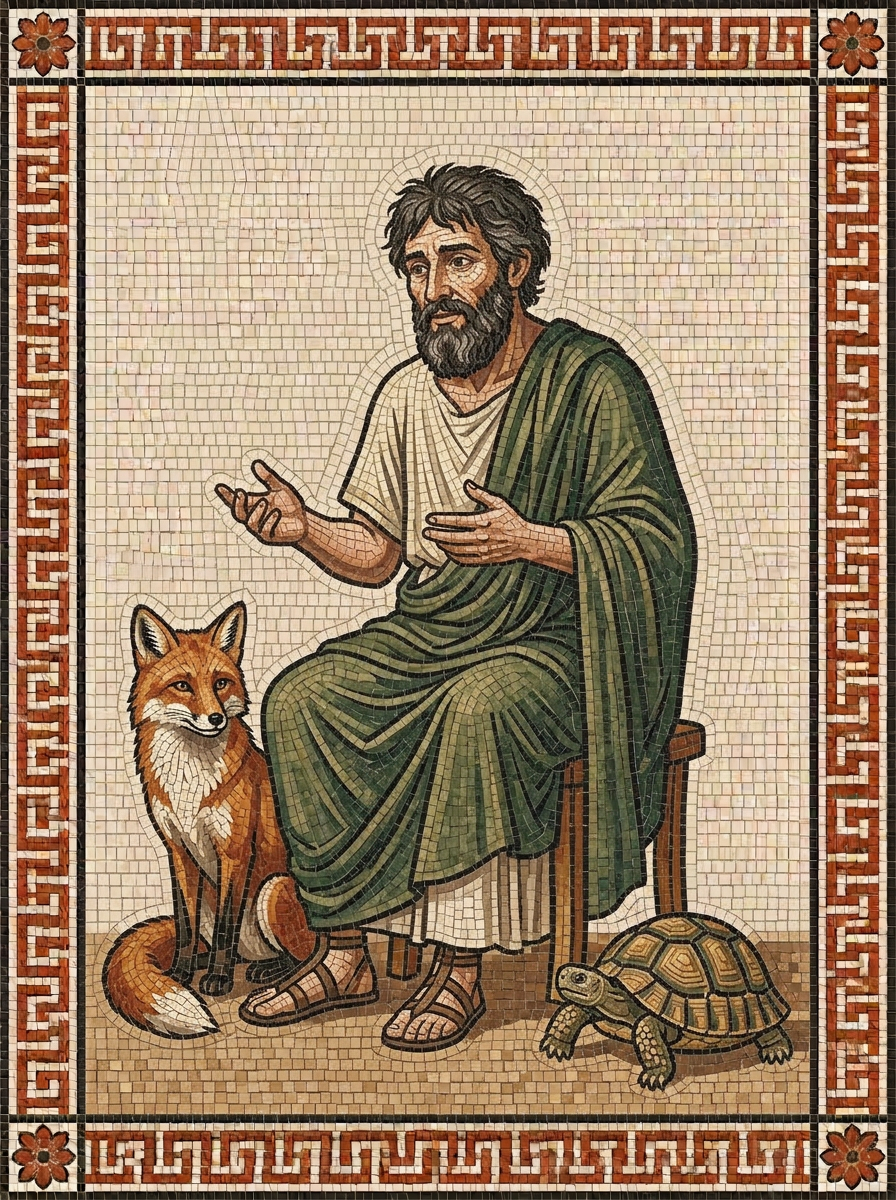
Mosaic of AesopArchaic Age · Fables

Aesop

Αἴσωπος

EE-sop (Classical Greek: AI-soh-pos)

What to know

The traditional name behind Greece's best-known animal fables: the fox and the grapes, the tortoise and the hare, and hundreds more. Herodotus describes him as an enslaved storyteller associated with Samos who died at Delphi. Most details of his life come from much later legend. No original book by Aesop survives; the fables grew through oral retelling and later Greek and Latin collections, so they cannot all be dated to a single author.

Born
c. 620 BC (traditional)
Uncertain; Phrygia or Thrace in tradition
Died
c. 564 BC (traditional)
Delphi, by tradition
Age
c. 56 (traditional)

Fable collections & ancient accounts

Where he lived · Samos and Delphi, by tradition

24
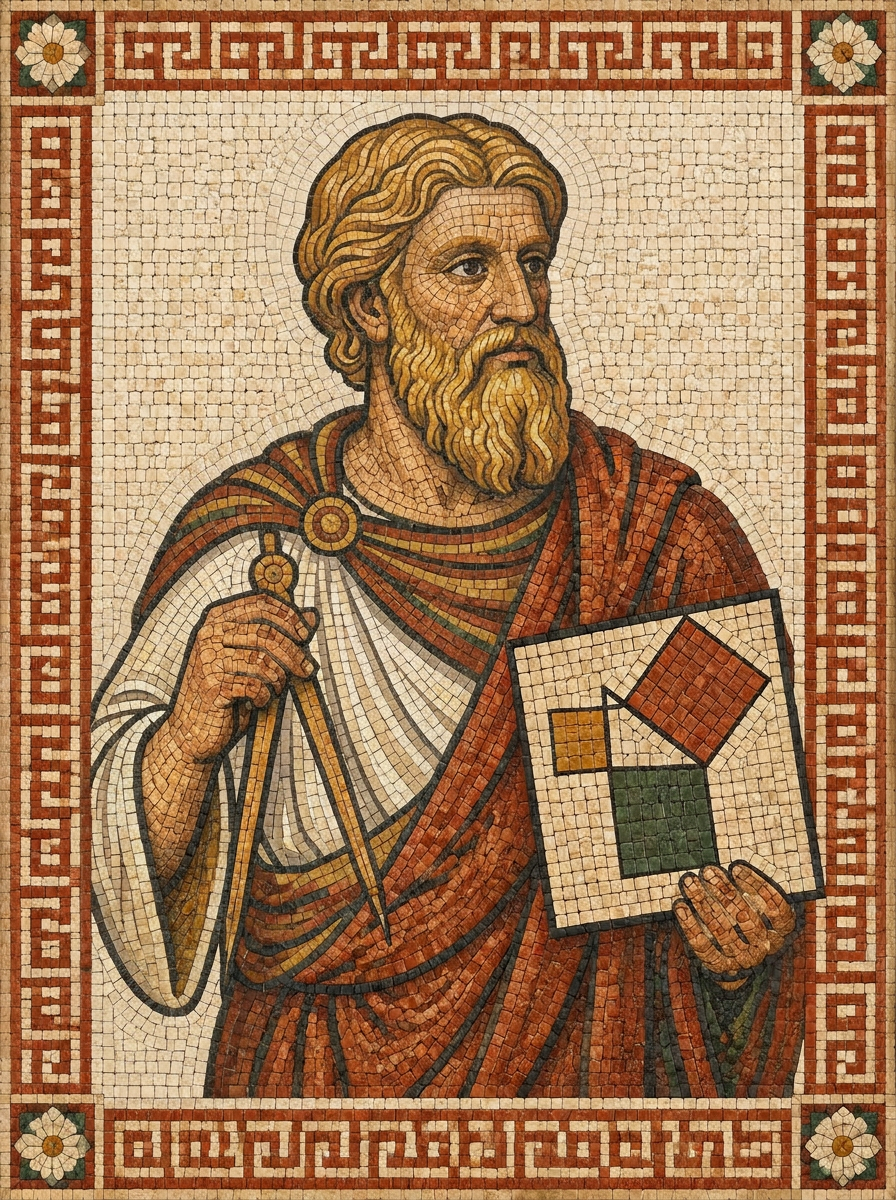
Mosaic of PythagorasArchaic Age · Mathematics & Mysticism

Pythagoras

Πυθαγόρας

pih-THAG-or-us (Classical Greek: pew-t-ha-GO-ras)

What to know

Left Samos for Croton in Italy, where he founded a brotherhood bound by vegetarian rules, secrecy and belief in the rebirth of souls. He taught that number is the hidden order of everything — from musical harmony to the stars — and coined the word philosophia. The famous theorem bears his name, though the proof likely came from his followers.

Born
c. 570 BC
Samos
Died
c. 495 BC
Metapontum, Magna Graecia
Age
c. 75

Where his teachings are recorded

Where he lived · Croton, southern Italy

25
Mosaic of Leonidas IClassical Age · Persian Wars

Leonidas I

Λεωνίδας

lee-ON-ih-das (Classical Greek: le-oh-NEE-dahs)

What to know

An Agiad king of Sparta who led the defense of the pass at Thermopylae against Xerxes in 480 BC. His force included 300 Spartans and several thousand other Greeks, not just the celebrated 300. After the Persians outflanked the position, Leonidas stayed for the final stand with the Spartans, 700 Thespians and other contingents. Their defeat became a lasting symbol of resistance. He left no surviving writings; the principal narrative is Herodotus.

Born
c. 540 BC
Sparta, Laconia
Died
480 BC
Thermopylae
Age
c. 60

Where his story is told

Where he lived · Sparta, Laconia

26
Mosaic of SophoclesClassical Athens · Tragedy

Sophocles

Σοφοκλῆς

SOF-uh-kleez (Classical Greek: so-p-hok-LEHS)

What to know

A leading Athenian tragedian whose characters face impossible choices between family, civic duty and divine law. Of more than 120 plays attributed to him, only seven survive complete, alongside fragments including the satyr play Trackers. He expanded the dramatic possibilities of tragedy, traditionally by introducing a third actor, and served Athens as a general and public official. Antigone and Oedipus the King remain central works of world drama; their dates are not all certain.

Born
c. 496 BC
Colonus, near Athens
Died
406/405 BC
Athens
Age
c. 90

Seven complete plays & fragments

Where he lived · Athens and Colonus

27
Mosaic of PericlesClassical Athens · Statesmanship

Pericles

Περικλῆς

PAIR-ih-kleez (Classical Greek: pe-rik-LEHS)

What to know

The dominant elected leader of democratic Athens in the mid-fifth century BC. He supported citizen participation, paid jury service and the rebuilding of the Acropolis, including the Parthenon. Athens' flourishing arts rested alongside an increasingly coercive maritime empire. He led the city into the early Peloponnesian War and died during the plague. No authored works survive: the famous Funeral Oration is Thucydides' literary reconstruction of his speech, not a verbatim transcript.

Born
c. 495 BC
Athens
Died
429 BC
Athens, during the plague
Age
c. 66

Speeches reported & ancient biography

Where he lived · Athens, Attica

28
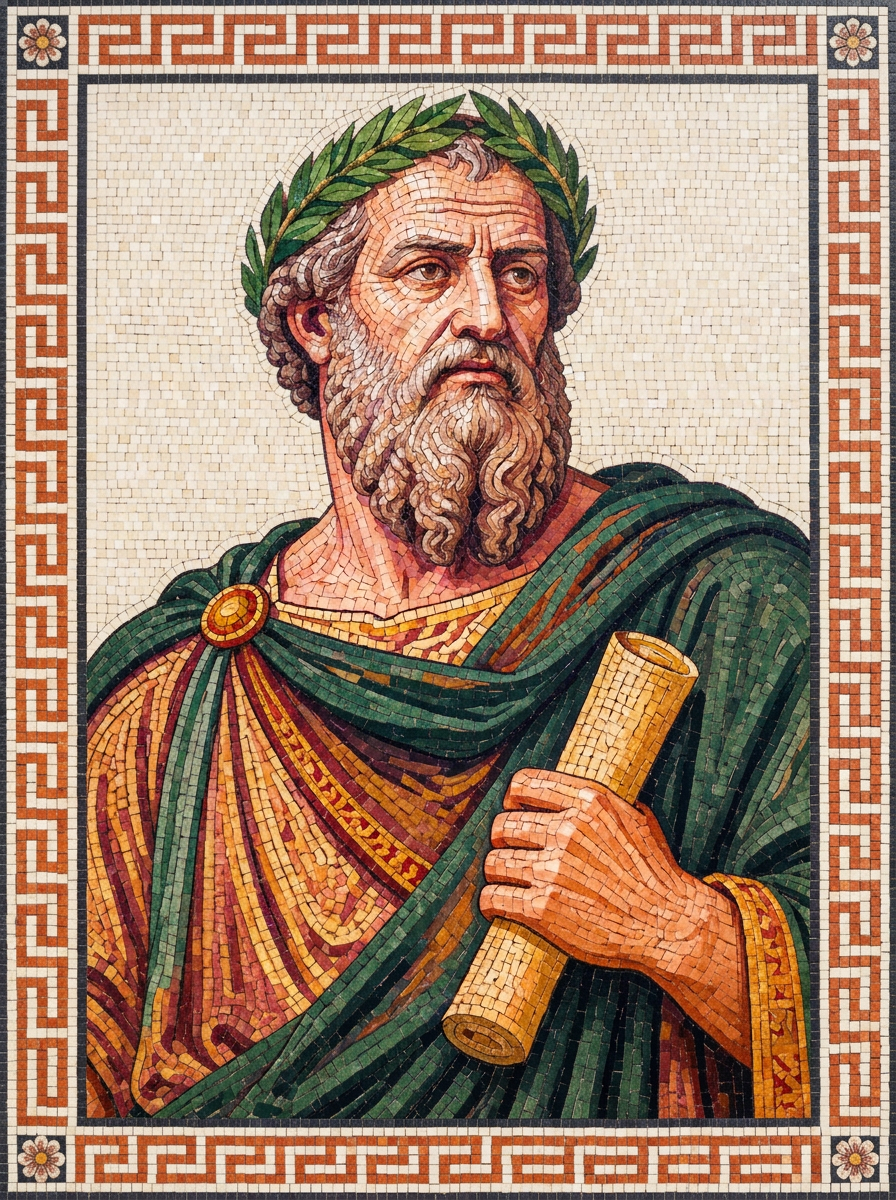
Mosaic of HerodotusClassical Age · History

Herodotus

Ἡρόδοτος

hih-ROD-uh-tus (Classical Greek: heh-RO-do-tos)

What to know

A Greek writer from Halicarnassus whose Histories investigates the wars between Greece and Persia and the peoples drawn into them. His inquiries range across Egypt, Lydia, Scythia and the Persian Empire, combining travel reports, oral traditions and critical comparisons. Called the Father of History, he often tells readers when accounts conflict or seem doubtful. The nine-book division is later; the work survives as one broad investigation rather than nine separately dated publications.

Born
c. 484 BC
Halicarnassus, Caria
Died
c. 425 BC
Uncertain; Thurii by tradition
Age
c. 59

Surviving work

Where he lived · Halicarnassus, travels and Thurii

29
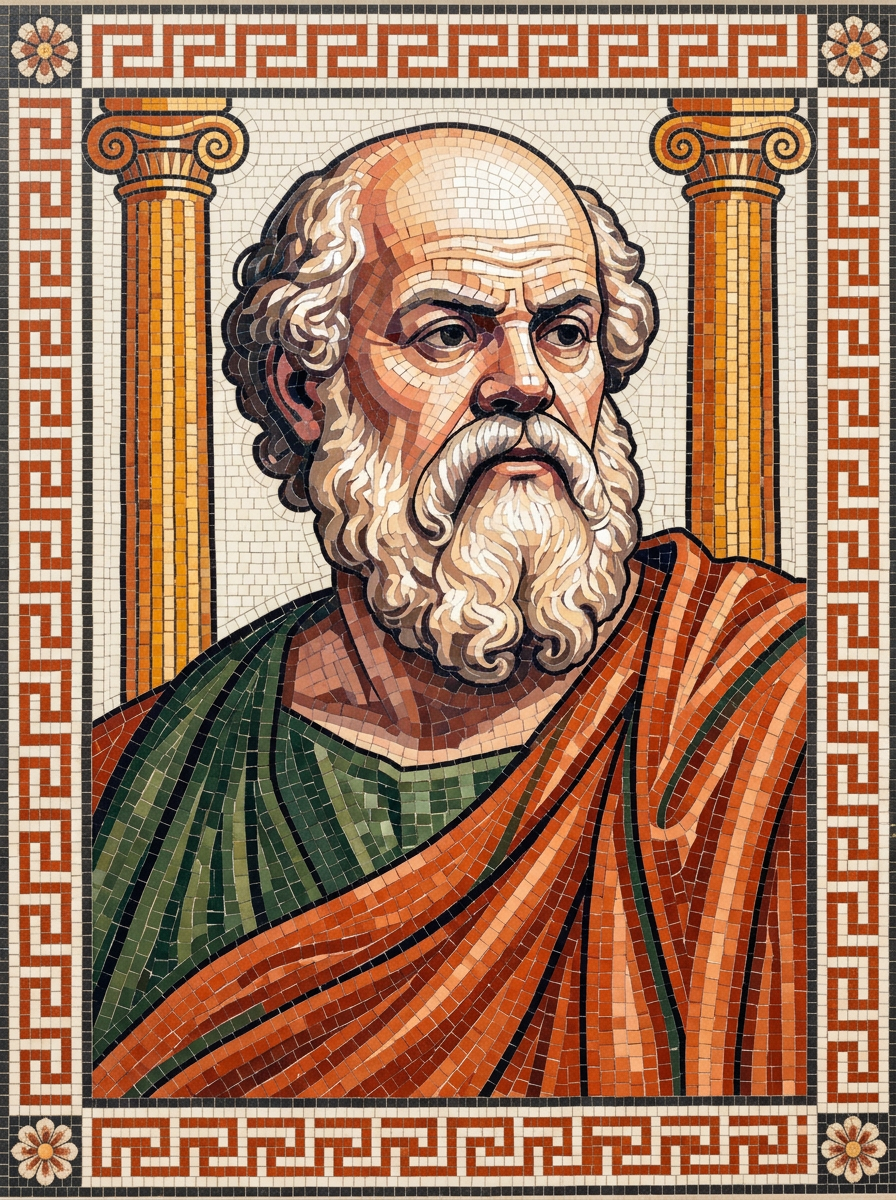
Mosaic of SocratesClassical Athens

Socrates

Σωκράτης

SOK-ruh-teez (Classical Greek: soh-KRAH-tehs)

What to know

The founder of Western moral philosophy. Socrates questioned Athenians in the marketplace to expose contradictions in their beliefs — the 'Socratic method.' He held that the unexamined life is not worth living and that virtue is a kind of knowledge. Tried for impiety and corrupting the youth, he chose death over exile.

Born
c. 470 BC
Alopece, Athens
Died
399 BC
Athens (executed by hemlock)
Age
c. 71

Complete known works

Where he lived · Athens, Attica

30
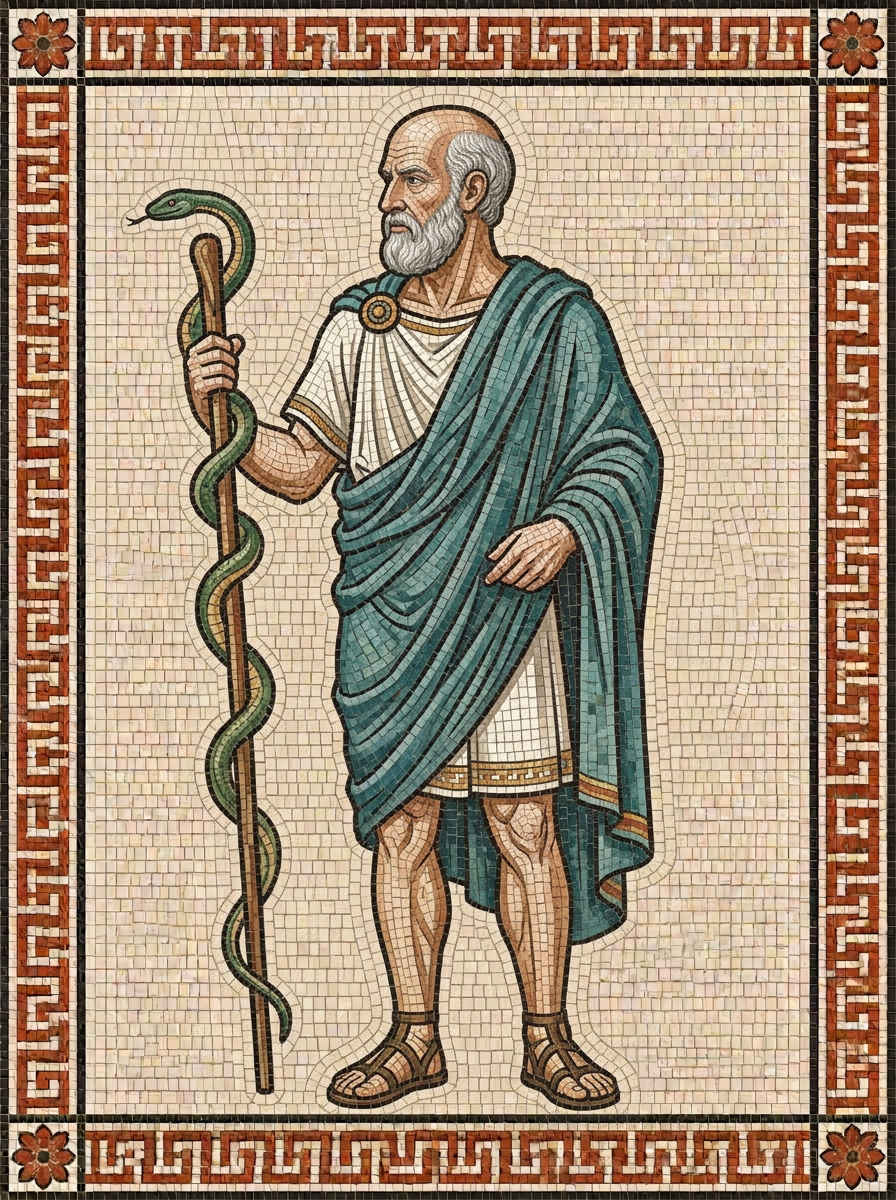
Mosaic of HippocratesClassical Age · Medicine

Hippocrates

Ἱπποκράτης

hih-POK-ruh-teez (Classical Greek: hip-pok-RA-tehs)

What to know

A physician from Kos associated with an influential tradition of natural explanations for illness, careful observation and medical ethics. The roughly sixty treatises of the Hippocratic Corpus include case histories, surgical writings, regimen and the Oath; they were written by different authors over several centuries. None can securely be assigned to Hippocrates himself. The Sacred Disease challenges supernatural explanations of epilepsy. His lifespan and later travels depend largely on biographical tradition.

Born
c. 460 BC
Kos
Died
c. 370 BC (traditional)
Larissa, Thessaly (traditional)
Age
c. 90 (traditional)

Hippocratic Corpus (multiple authors)

Where he lived · Kos and Thessaly

31
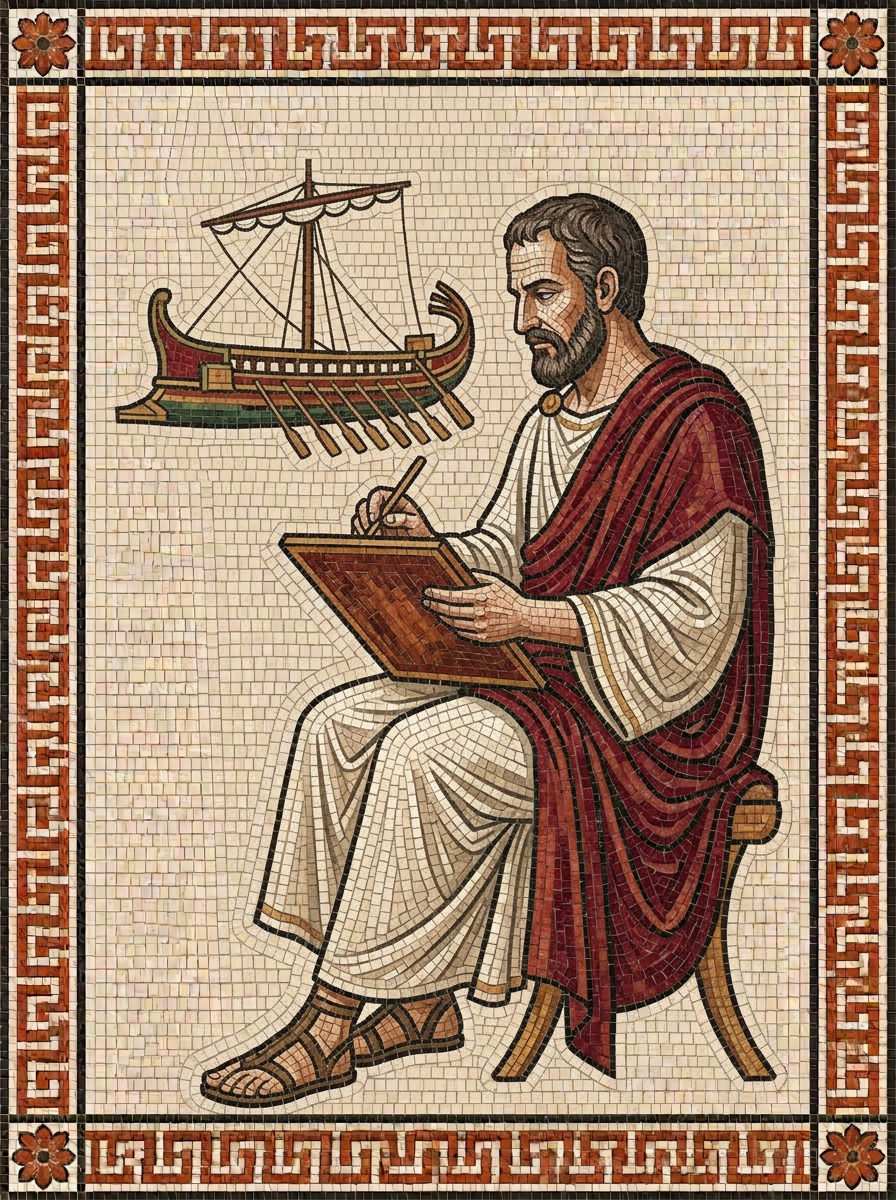
Mosaic of ThucydidesClassical Age · History

Thucydides

Θουκυδίδης

thoo-SID-ih-deez (Classical Greek: t-hoo-kew-DEE-dehs)

What to know

An Athenian general who chronicled the war between Athens and Sparta. Exiled after failing to prevent the loss of Amphipolis in 424 BC, he gathered evidence from both sides and examined power, fear and political decision-making. His account includes the plague at Athens, the Funeral Oration, the Melian Dialogue and the Sicilian disaster. He reconstructs speeches rather than claiming exact transcripts. The unfinished work stops in 411 BC, before the war ended in 404.

Born
c. 460 BC
Halimous, Athens
Died
c. 400 BC
Uncertain
Age
c. 60

Surviving work

Where he lived · Athens and exile in Thrace

32
Mosaic of PlatoClassical Athens

Plato

Πλάτων

PLAY-toe (Classical Greek: PLAH-tohn)

What to know

Socrates' student and Aristotle's teacher. Plato founded the Academy, the first lasting school of higher learning in the West. Through dialogues starring Socrates, he argued that beyond the changing world lie eternal Forms — true reality grasped by reason. His Republic imagines a just city ruled by philosopher-kings.

Born
c. 428/427 BC
Athens
Died
c. 348/347 BC
Athens
Age
c. 80

Complete known works

Where he lived · Athens (the Academy)

33
Mosaic of AristotleLate Classical · Philosophy

Aristotle

Ἀριστοτέλης

AIR-is-tot-ul (Classical Greek: a-ris-to-TEH-lehs)

What to know

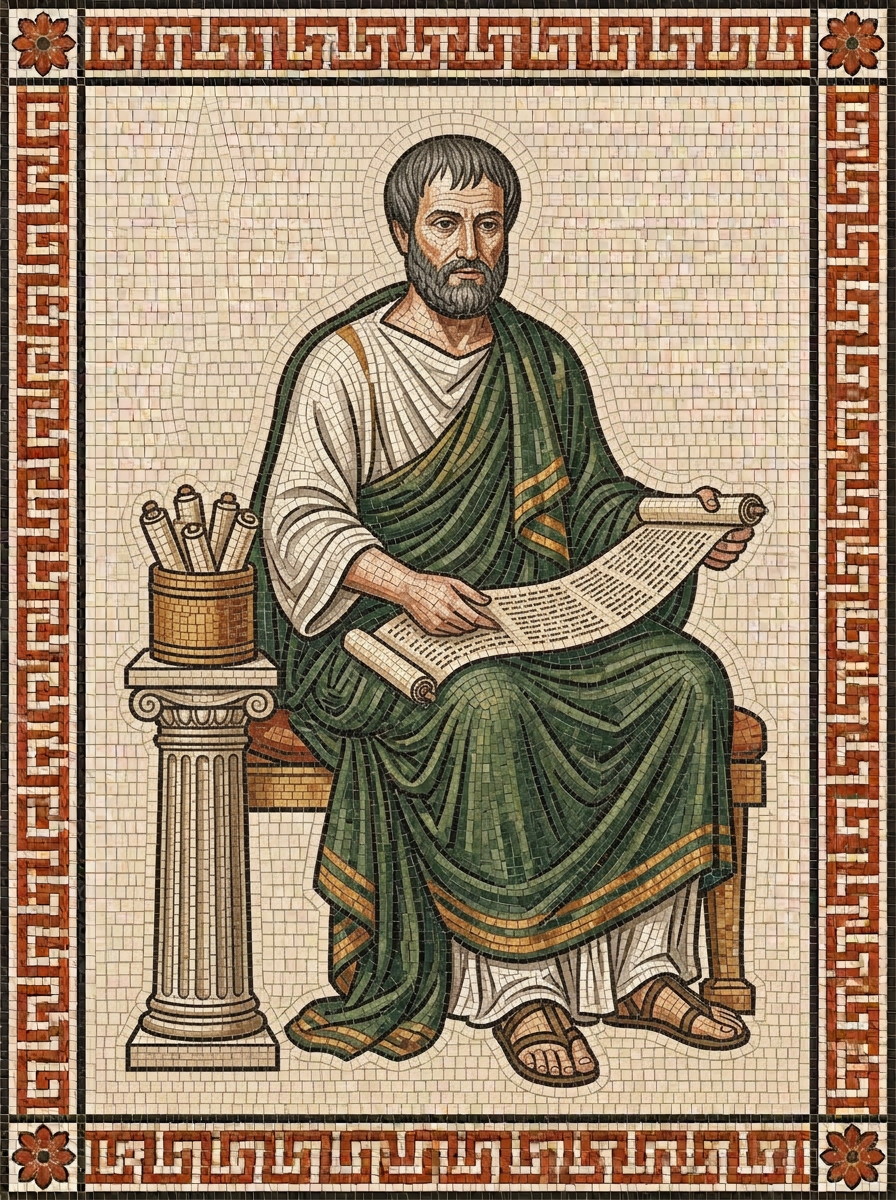
Plato's student for twenty years and tutor to the young Alexander. He founded the Lyceum in Athens, where he taught while walking — hence 'Peripatetics.' Where Plato looked past the world to eternal Forms, Aristotle studied the world itself: he invented formal logic, classified hundreds of animals, and wrote on physics, ethics, politics, poetry and rhetoric. For nearly two thousand years he was simply 'the Philosopher.'

Born
384 BC
Stagira, Chalcidice
Died
322 BC
Chalcis, Euboea
Age
c. 62

Complete known works

Where he lived · Athens (the Lyceum) and Stagira

34
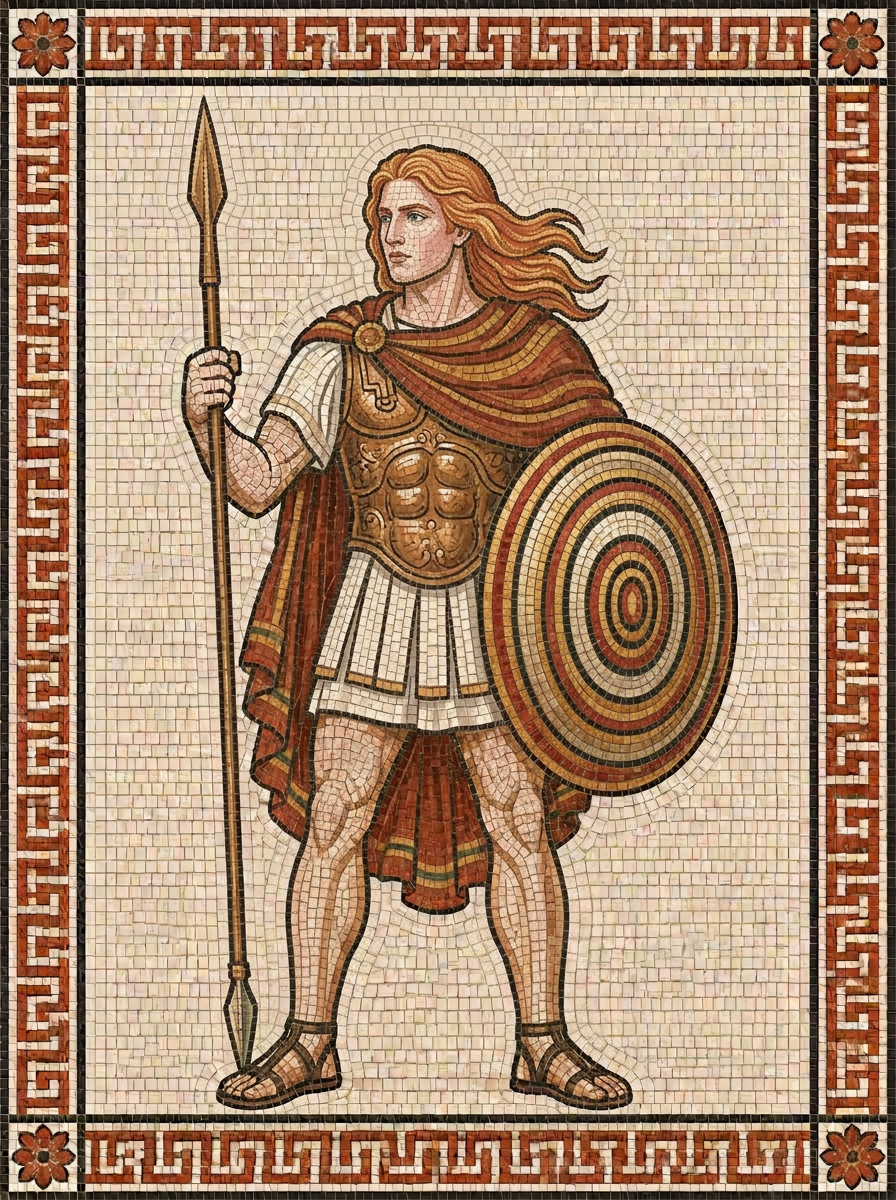
Mosaic of Alexander the GreatHellenistic Dawn · Macedon

Alexander the Great

Ἀλέξανδρος ὁ Μέγας

al-ig-ZAN-der (Classical Greek: a-LEK-san-dros)

What to know

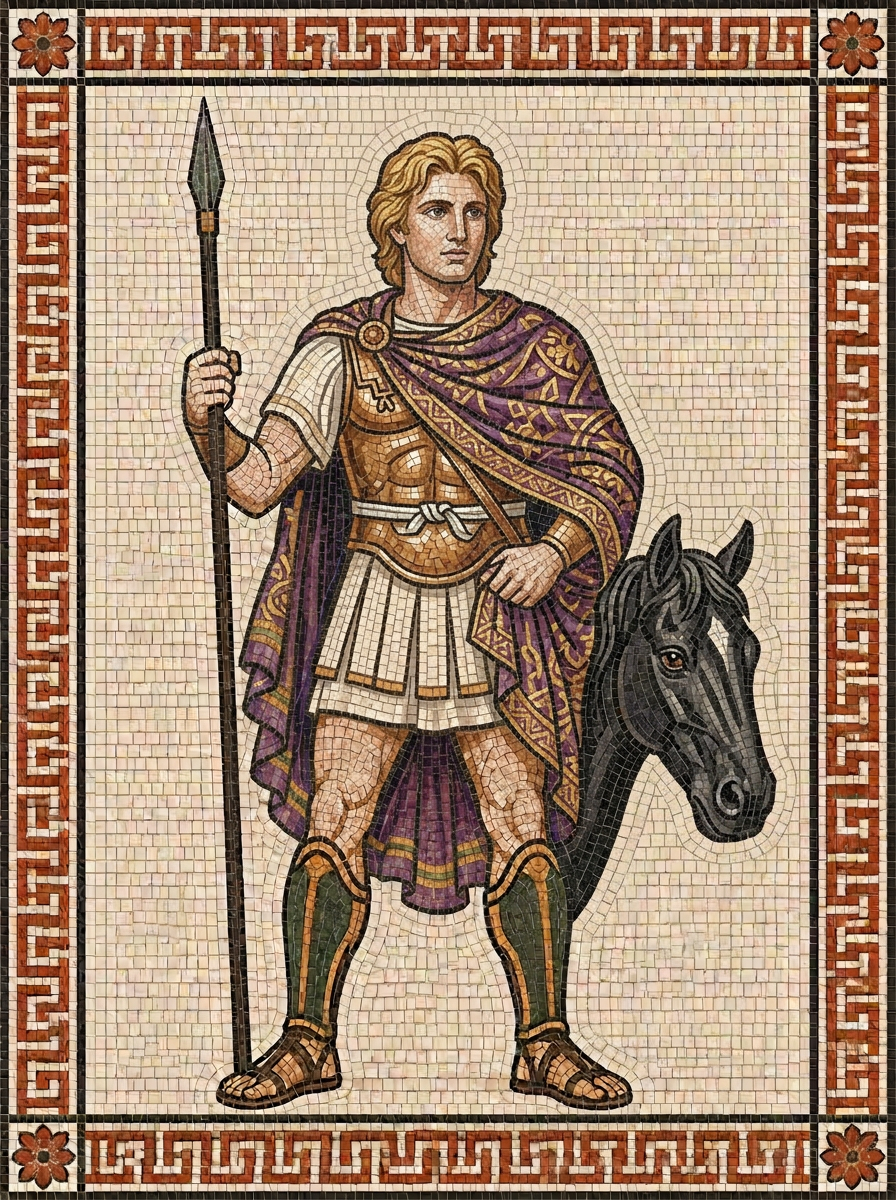
Son of Philip II of Macedon and pupil of Aristotle. Crowned at twenty, he crossed into Asia, defeated the Persian king Darius at Issus and Gaugamela, founded Alexandria in Egypt, and marched as far as India before his army refused to go on. He died in Babylon at thirty-two, never defeated in battle. His conquests spread Greek language and culture from the Nile to the Indus — the beginning of the Hellenistic age.

Born
356 BC
Pella, Macedon
Died
323 BC
Babylon
Age
32

Where his story is told

Where he lived · Pella, then from Egypt to India

35
Mosaic of EuclidHellenistic Age · Geometry

Euclid

Εὐκλείδης

YOO-klid (Classical Greek: eu-KLEI-dehs)

What to know

The geometer associated with Alexandria around 300 BC, probably under Ptolemy I. Almost nothing reliable is known about his life. His Elements organizes geometry, proportion and number theory into definitions, postulates and deductive proofs, becoming one of history's most influential textbooks. It synthesizes earlier mathematics as well as preserving new arguments. Other surviving or indirectly transmitted works cover optics, astronomy and geometric analysis. His birth and death dates should not be inferred from his period of activity.

Born
Unknown (active c. 300 BC)
Unknown
Died
Unknown
Unknown
Age
Unknown

Surviving works & fragmentary writings

Where he lived · Alexandria, Egypt

36
Mosaic of ArchimedesHellenistic Age · Mathematics

Archimedes

Ἀρχιμήδης

ar-kih-MEE-deez (Classical Greek: ar-k-hi-MEH-dehs)

What to know

Mathematician and engineer of Syracuse who advanced geometry, mechanics and the study of floating bodies. He bounded pi, proved the relation between a sphere and its enclosing cylinder, and used mechanical reasoning to discover results later established by proof. Siege engines helped defend Syracuse against Rome; he was killed when the city fell in 212 BC. The bath-time Eureka story is later tradition, while tales of burning mirrors are especially uncertain. His writings survive through complex Greek and Arabic transmission.

Born
c. 287 BC
Syracuse, Sicily
Died
212 BC
Syracuse, during the Roman capture
Age
c. 75

Surviving treatises & fragments

Where he lived · Syracuse, Sicily

37
Mosaic of EratosthenesHellenistic Age · Geography

Eratosthenes

Ἐρατοσθένης

air-uh-TOS-thuh-neez (Classical Greek: e-ra-tos-T-HE-nehs)

What to know

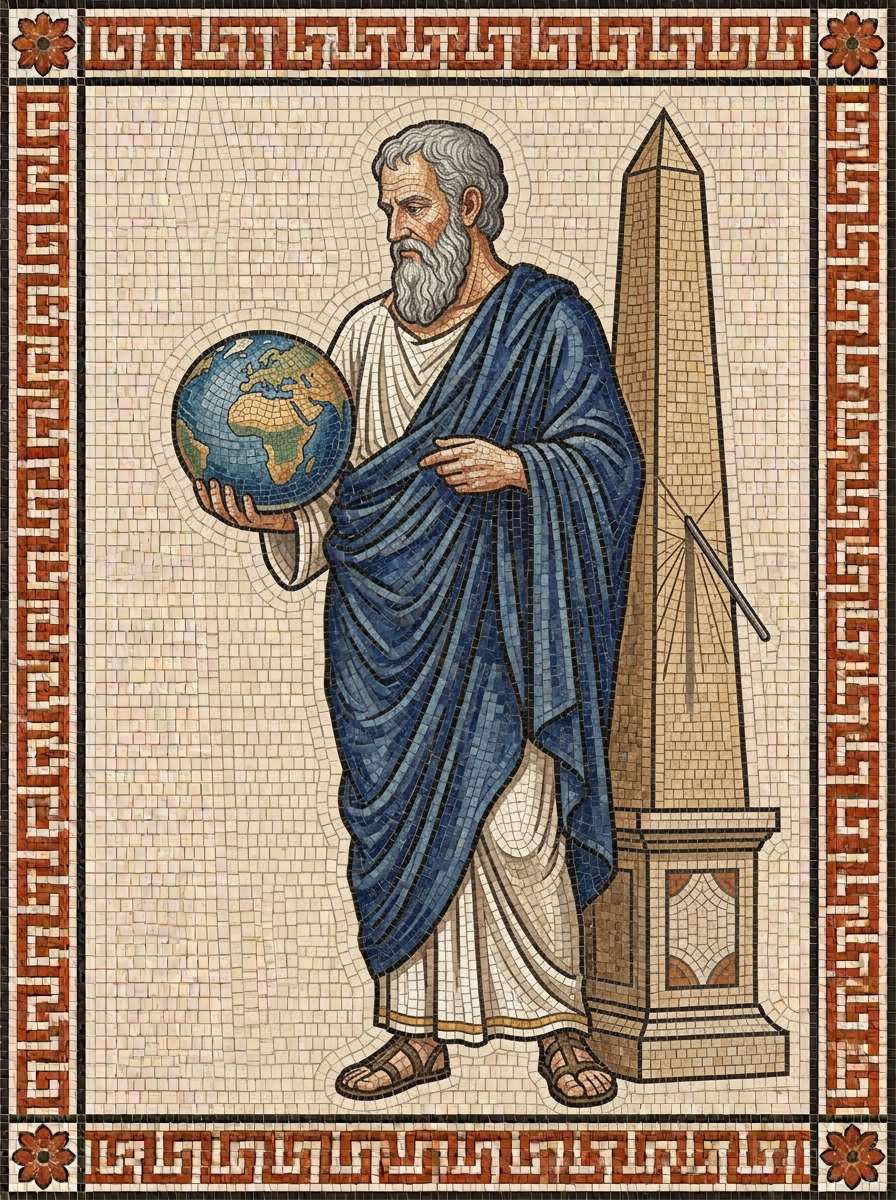
A scholar from Cyrene who became head of the Library of Alexandria. Comparing the summer-solstice sun at Syene and Alexandria with the distance between the cities, he estimated Earth's circumference using geometry. Ancient reports give differing totals in stadia, and the unit's length is uncertain, so a precise modern error percentage is misleading. He also developed geographical coordinates, chronology and the sieve for finding primes. Most of his own books are lost and known through quotations or later accounts.

Born
c. 276 BC
Cyrene, North Africa
Died
c. 194 BC
Alexandria, Egypt
Age
c. 82

Lost works, fragments & later accounts

Where he lived · Cyrene, Athens and Alexandria

38